Editorial Note
DOI:
https://doi.org/10.63726/jmsit.v2i1.633Abstract
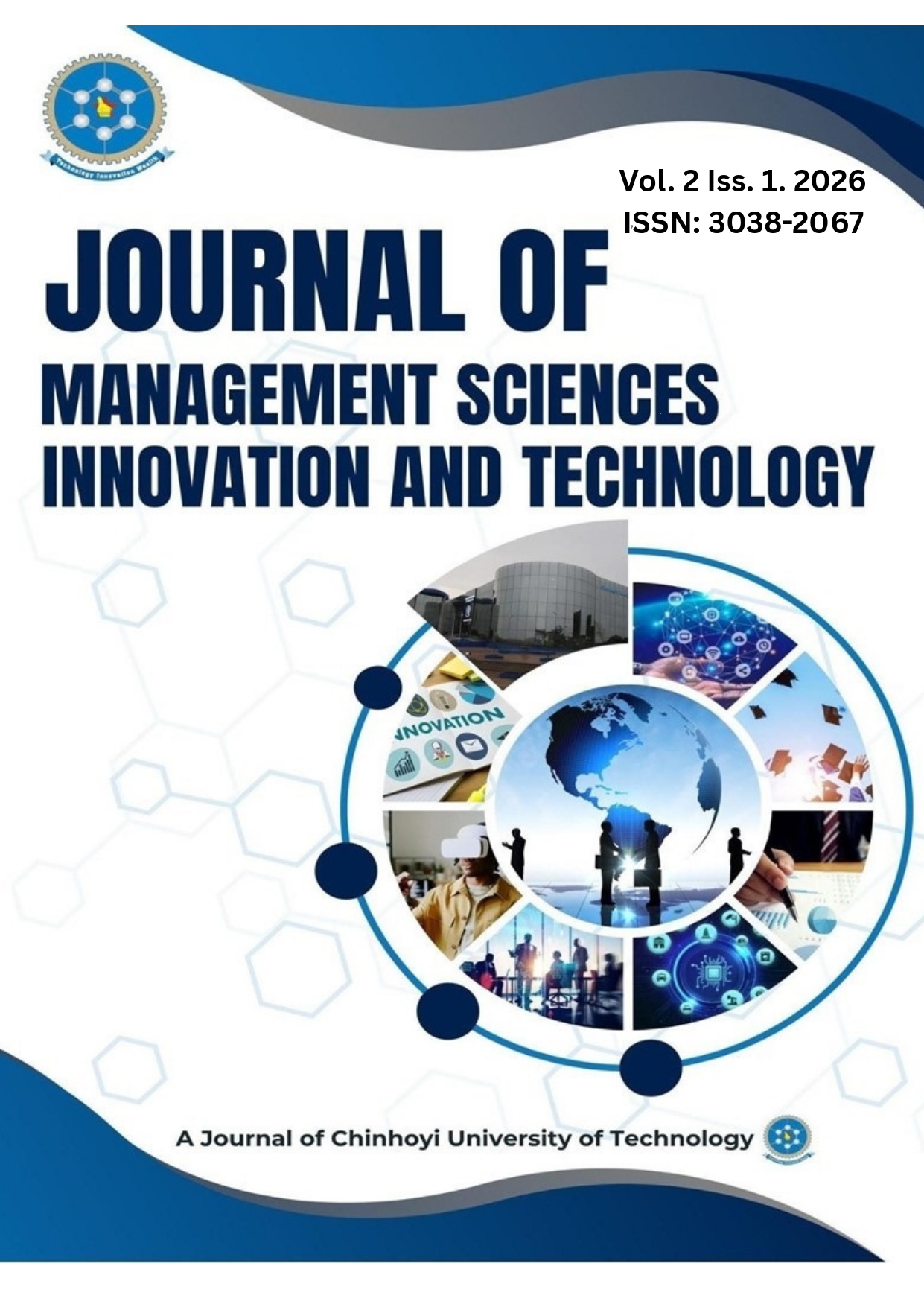
The Journal of Management, Science, Innovation and Technology (JMSIT) is pleased to present Volume 2, Issue 1, a rich and multidisciplinary collection of scholarly works that collectively advance discourse at the intersection of management, innovation, technology, and sustainable development, particularly within the African context.
This issue brings together diverse empirical and conceptual contributions that interrogate contemporary challenges and opportunities in society. A strong thematic thread across the manuscripts is the pursuit of contextualised innovation and inclusive development, with a clear emphasis on indigenous knowledge systems, human capital development, and institutional transformation. Several contributions in this volume explore human resource development and leadership dynamics. Studies on ethical leadership, Ubuntu philosophy, and moral courage within Zimbabwean urban councils provide critical insights into governance and organisational integrity. Complementing these are investigations into employee training, career development, and human resource strategies in sectors such as mining and local authorities, highlighting the centrality of people-centred approaches in driving performance and sustainability.
The issue further underscores the importance of knowledge systems and collaborative innovation. Research on knowledge sharing in state universities reveals its mediating role in enhancing institutional performance, while studies on artificial intelligence and blockchain technologies demonstrate the transformative potential of digital innovation in Zimbabwe’s banking sector. A notable contribution of this volume is its strong focus on indigenous knowledge, harurwa and localised value chains.
In addition, the issue engages with entrepreneurship and economic transformation. Articles on the silver economy and elderly entrepreneurship in informal sectors broaden the discourse on inclusivity, while analyses of tax incentives and foreign direct investment offer policy-relevant insights for regional economic development within SADC and beyond. Tourism and hospitality also feature prominently, with critical examinations of domestic tourism strategies, community empowerment in sustainable tourism, and the conceptual foundations of hospitality as a discipline. These contributions deepen understanding of how tourism can be leveraged for community development and national growth.
Collectively, the manuscripts in this issue reflect a commitment to evidence-based scholarship, contextual relevance, and practical applicability. They not only contribute to academic knowledge but also provide actionable insights for policymakers, industry practitioners, and development stakeholders.
The Editorial Board extends its sincere appreciation to all authors and reviewers whose dedication and scholarly rigour have made this publication possible. As JMSIT continues to grow, it remains committed to fostering impactful research that drives innovation, informs policy, and contributes to sustainable development in Africa and beyond.
Downloads
Published
Issue
Section
License
Copyright (c) 2026 Obert Sifile

This work is licensed under a Creative Commons Attribution 4.0 International License.